

🇪🇳 Explore the future of the Nasdaq 100 in 2026. Insights on the 100 largest non-financial companies, AI trends, and market forecasts for the year.
Nasdaq 100: The Non-Financial Giants Shaping the Global Landscape - What to Expect in 2026?
Por: Túlio Whitman | Repórter Diário
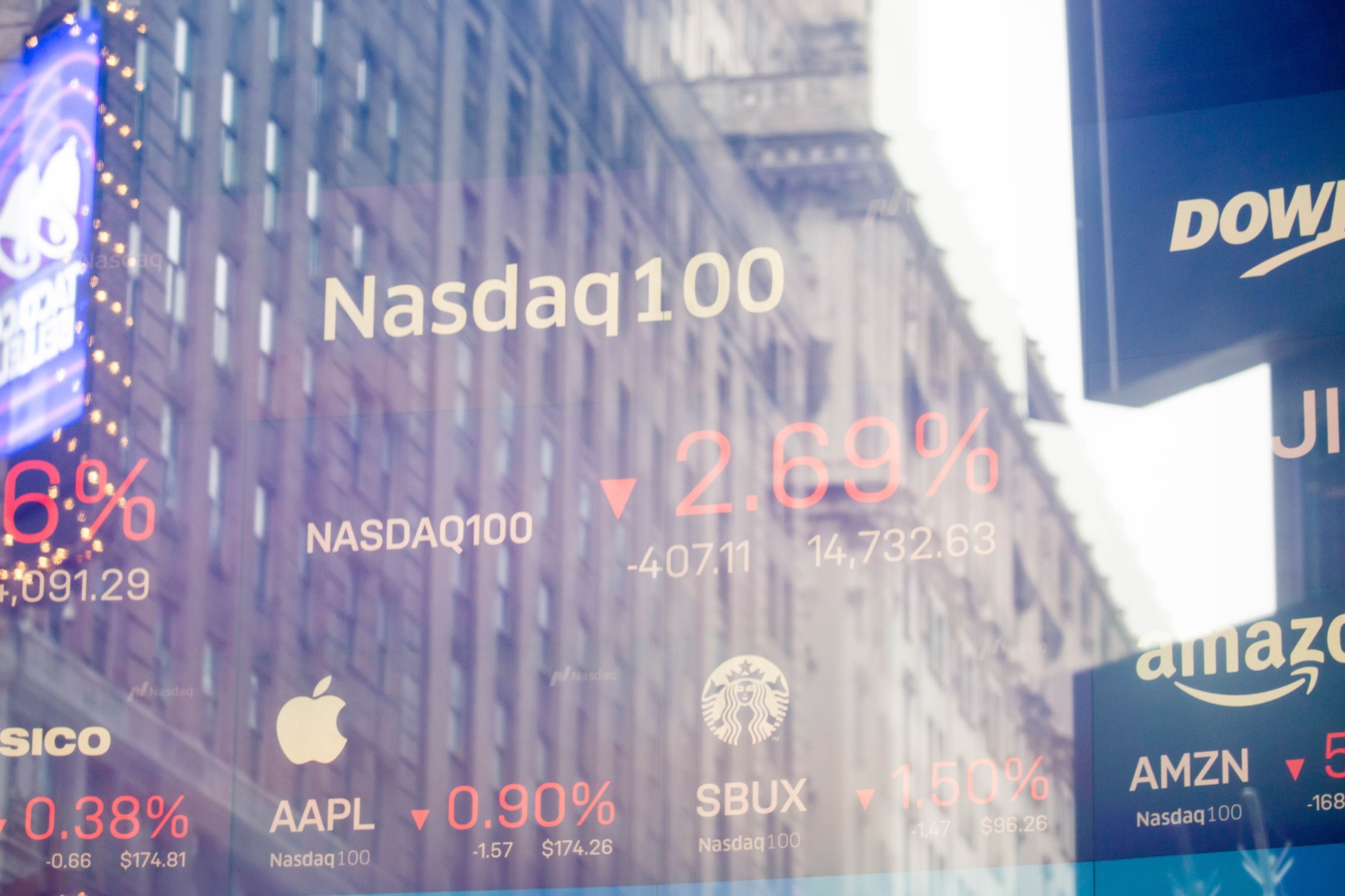 |
| According to reports from Goldman Sachs and Morgan Stanley, the index is expected to maintain a growth trajectory, with strategists forecasting a gain of 7% to 12% throughout the year. |
The financial pulse of the global economy often finds its most vibrant rhythm within the corridors of the Nasdaq 100, an index that serves as a mirror to the most innovative and powerful non-financial entities on the planet. As we stand at the threshold of 2026, the anticipation surrounding these corporate titans is not merely a matter of numbers, but a reflection of how technology and consumer resilience will redefine our collective future. I, Túlio Whitman, have delved into the intricacies of market trends and economic forecasts to bring you a comprehensive look at what lies ahead for this prestigious index.
To provide a grounded and authoritative perspective, I have synthesized insights from Nasdaq, a primary source for real-time market data and historical performance metrics. As we explore the trajectory of these 100 largest non-financial companies, we must acknowledge that the landscape of 2026 is being forged today by the relentless pursuit of efficiency and the bold integration of artificial intelligence across every sector.
The Resilience of Innovation in a Shifting Economy
🔍 Immersive Experience
Stepping into the world of the Nasdaq 100 in 2026 feels like entering a high-velocity laboratory where the future is being prototyped in real-time. Imagine walking through the gleaming glass offices of Silicon Valley or the sprawling data centers in northern Virginia; here, the "non-financial" label is a badge of honor, representing companies that build, code, and cure rather than just move capital. The experience is one of sensory overload—the hum of servers cooling under the weight of generative AI processing and the silent, rapid logistics of automated supply chains. This index is the heartbeat of a world that no longer waits for progress but demands it.
As we navigate this environment, the air is thick with the scent of competition. The Nasdaq 100 is not a static list; it is an arena. In 2026, the immersion is deeper because the technology is more tactile. We are seeing the second phase of the AI revolution, moving from large language models to agentic AI—systems that don’t just answer questions but perform tasks. This shift is palpable in the way these companies interact with the public. From the cars we drive to the healthcare diagnostics we receive, the influence of the top 100 is inescapable. It is an era where software doesn't just eat the world; it orchestrates it with a level of precision that was science fiction just a decade ago.
The emotional tone of this experience is a mix of awe and cautious vigilance. While the growth is intoxicating, there is a lingering awareness of the "adoption gap." Companies are spending billions on infrastructure, and in 2026, the market is finally asking for the receipt. We are witnessing the tension between the visionary storytelling of CEOs and the hard reality of return on investment. This immersive journey through the Nasdaq 100 reveals a corporate culture that is hyper-focused on efficiency, where the margin for error has narrowed, and the pressure to perform is constant.
📊 X-ray of Data
When we perform a clinical X-ray of the Nasdaq 100 data for 2026, the skeletal structure of the index reveals a fascinating shift in composition and valuation. According to reports from Goldman Sachs and Morgan Stanley, the index is expected to maintain a growth trajectory, with strategists forecasting a gain of 7% to 12% throughout the year. This growth is underpinned by a projected acceleration in corporate profit growth to 14%, a significant jump from previous years. The heavyweights—often referred to as the "Magnificent Seven"—continue to hold substantial sway, but the concentration risk is slowly being diluted as the AI theme broadens its reach.
The data shows that capital expenditure (CapEx) in the tech sector is reaching unprecedented heights. Large U.S. tech companies have tripled their annual investment, with figures projected to exceed $500 billion in 2026. This is not just a "tech bubble" in the traditional sense; it is a fundamental re-tooling of the global economy. Interest rates also play a pivotal role in this X-ray. With the Federal Reserve expected to continue a cycle of easing, the lower discount rates are providing a tailwind for "long-duration" assets—stocks whose value is heavily weighted toward future earnings, a category that includes most of the Nasdaq 100.
Furthermore, the "X-ray" highlights specific sectors within the index. Semiconductors and cloud services are expected to deliver double-digit revenue gains, though at a more "normalized" pace compared to the frenetic surge of 2024. Interestingly, the data also suggests a "buy-the-dip" mentality remains prevalent among institutional investors. Technical analysis indicates key support levels around 25,000 points, with resistance testing the 28,000 mark. This data suggests a market that is "priced for perfection," where any deviation from expected earnings can lead to sharp, albeit often temporary, volatility.
💬 Voices of the City
The sentiment on the streets—and in the digital forums where modern "cities" reside—is a complex tapestry of optimism and skepticism. When talking to retail investors and industry analysts, the consensus is that the Nasdaq 100 is no longer just for the "tech-savvy"; it is the foundation of many retirement portfolios. "The Nasdaq 100 is the new gold," says one independent trader, echoing a sentiment that these 100 companies are the safest bet in a volatile world. However, this "Voices of the City" segment also uncovers a growing concern regarding the "AI bubble."
In the financial hubs of New York and London, the chatter in coffee shops often turns to the sustainability of current valuations. Analysts from Vanguard have noted that "risks are growing," particularly as the market transitions from the "build-out" phase of AI to the "adoption" phase. There is a sense of "AI fatigue" among some, who wonder when the massive investments in data centers will start yielding tangible profits for the average consumer. Meanwhile, the "people on the ground"—the employees of these non-financial giants—speak of a relentless drive for productivity, often facilitated by the very AI tools their companies are developing.
The phrase "O povo posta, a gente pensa. Tá na rede, tá oline!" captures the essence of this block. Social media is flooded with "finfluencers" dissecting every move of companies like NVIDIA or Apple. The digital public is highly engaged, often reacting in real-time to quarterly earnings reports. This democratic access to information has created a more informed, yet more reactionary, market environment. The voices of the city in 2026 are loud, diverse, and increasingly critical of anything that looks like corporate overreach or empty promises.
🧭 Viable Solutions
Navigating the potential volatility of the Nasdaq 100 in 2026 requires a strategic compass. One viable solution for investors and companies alike is active diversification. While the index itself is a form of diversification across non-financial sectors, the heavy concentration in a few mega-cap stocks can be risky. Portfolio managers are increasingly suggesting a "barbell strategy"—balancing high-growth tech giants with quality, cash-flow-positive companies in sectors like healthcare and consumer staples that also reside within the Nasdaq 100.
Another solution lies in operational efficiency. For the companies within the index, the "easy money" era of low rates and high hype is over. To sustain their valuations in 2026, they must prove they can use AI to actually lower costs and increase margins. This means moving beyond experimental AI projects to integrated, revenue-generating applications. From a regulatory perspective, "viable solutions" involve clearer frameworks for AI ethics and data privacy, which would provide the stability needed for long-term institutional investment.
For the individual investor, the best solution is disciplined volatility management. Understanding that pullbacks of 5% to 10% are a healthy feature of a mature bull market can prevent panic selling. Using automated tools and maintaining a long-term horizon allows investors to ride out the noise. As we see in the 2026 outlooks from BlackRock, focusing on "idiosyncratic exposures"—picking specific winners rather than just betting on the whole market—is becoming a more refined way to capture alpha in a broadening bull market.
🧠 Point of Reflection
As we contemplate the state of the Nasdaq 100 in 2026, we must ask ourselves: Are we valuing innovation, or are we valuing the expectation of innovation? The index is a testament to human ingenuity, but it is also a reminder of our tendency toward irrational exuberance. The "Point of Reflection" here is about the soul of these companies. In their quest for the next trillion-dollar market cap, have they maintained their focus on solving real-world problems, or have they become engines of pure financial engineering?
The Nasdaq 100 represents the pinnacle of the non-financial world, yet its movements are often dictated by the most complex financial instruments. This paradox invites us to reflect on the nature of value in the 21st century. If a company's stock price is driven more by its "AI narrative" than its actual service to the public, the foundation is inherently fragile. In 2026, the reflection must be one of balance—appreciating the technological leaps while remaining grounded in the reality of economic cycles. We are witnessing the birth of a new industrial era, and like all such eras, it will be marked by both spectacular triumphs and humbling lessons.
📚 The First Step
For anyone looking to engage with the Nasdaq 100 in 2026, the first step is financial literacy. Understanding what "non-financial" actually means in this context—excluding banks and investment firms to focus on industry, technology, and retail—is crucial. One must learn to read beyond the headlines. When a company announces a "breakthrough," the first step for a savvy observer is to look at the balance sheet: Is this breakthrough generating cash, or is it burning it?
The second part of the "first step" is embracing a growth mindset. The Nasdaq 100 is where the world’s most ambitious ideas are commercialized. To understand its future, one must stay curious about emerging technologies like quantum computing and biotechnology, which are beginning to populate the lower ranks of the index. Education is the best defense against market manipulation and hype. By starting with a solid understanding of the index's methodology and the macroeconomic factors that drive it—like inflation and interest rates—anyone can move from being a passive observer to an informed participant.
📦 Chest of Memories 📚 Believe it or not
The Nasdaq 100 has a "Chest of Memories" filled with both cautionary tales and legendary successes. Believe it or not, when the index was created in 1985, it looked vastly different than it does today. It was once dominated by telecommunications and "old tech" companies that are now footnotes in history. The index has survived the dot-com bubble of 2000, the financial crisis of 2008, and the pandemic-induced volatility of 2020. Each of these events is a memory that serves as a lesson for the 2026 market: the names change, but the patterns of human behavior remain the same.
A startling "Believe it or not" fact: There was a time when the entire market cap of the Nasdaq 100 was less than what a single company like Apple or Microsoft is worth today. The scale of wealth creation is unprecedented. In the chest of memories, we also find the "fallen angels"—companies that were once the darlings of the index but failed to innovate and were eventually replaced. This constant "creative destruction" is what makes the Nasdaq 100 so resilient. It is a self-cleaning mechanism that ensures only the most relevant companies stay at the top.
🗺️ What are the next steps?
As we look past the immediate horizon of 2026, the next steps for the Nasdaq 100 involve global integration and ethical evolution. We are seeing a move toward "fragmentation," where supply chains are being reshaped by geopolitical tensions. The next step for these 100 companies is to navigate a world that is less globalized but more digitally connected. This means building more resilient, localized infrastructure while maintaining a global digital footprint.
For the index itself, the next steps may include a further diversification of sectors. While "tech" is the dominant label, we are seeing the rise of "green tech" and "deep med" within the Nasdaq 100. The companies that will lead the next decade are those currently sitting in the 80th to 100th positions, ready to disrupt the current leaders. Investors should keep a close eye on the "reconstitution" of the index, which happens every December, as it signals which industries are truly gaining momentum in the eyes of the market.
🌐 Booming on the web
"O povo posta, a gente pensa. Tá na rede, tá oline!" The digital world is currently obsessed with "The 2026 Pivot." On platforms like X and LinkedIn, the debate is raging about whether the Nasdaq 100 can maintain its premium valuation. Viral threads often compare the current AI cycle to the build-out of the internet in the late 90s. While some warn of a "crash," others point to the solid earnings of companies like Alphabet and Amazon as proof that this time is different.
The "web" is also where we see the cultural impact of these companies. Memes about NVIDIA's dominance or Tesla's latest autonomous driving update are more than just jokes; they are indicators of brand strength and public sentiment. In 2026, a company’s "social capital"—its reputation on the web—is almost as important as its financial capital. The Nasdaq 100 companies are hyper-aware of this, employing vast teams to manage their digital personas. What’s booming on the web is the democratization of market analysis, where a viral video can move a stock price just as effectively as a traditional analyst's note.
🔗 Âncora do conhecimento
The journey through the complexities of the Nasdaq 100 is just beginning, and staying informed is the only way to remain ahead of the curve. To deepen your understanding of how these corporate giants are navigating the current fiscal year, you can
Final Reflection
The Nasdaq 100 in 2026 is a portrait of a civilization in transition. It represents our greatest hopes for a more efficient, technologically advanced future, but it also reflects our anxieties about wealth concentration and the rapid pace of change. As we watch these 100 non-financial giants, we are not just watching stock tickers; we are watching the architects of our daily lives. The challenge for 2026 and beyond is to ensure that this immense power and innovation serve the broader human interest, balancing the drive for profit with a commitment to sustainable progress.
Featured Resources and Sources:
Goldman Sachs 2026 Outlook: "Tech Tonic—a Broadening Bull Market"
J.P. Morgan Global Research: "2026 Market Outlook"
Bloomberg Professional Services: Market Analysis and Terminal Data
⚖️ Disclaimer Editorial
This article reflects a critical and opinionated analysis prepared by the Diário do Carlos Santos team, based on publicly available information, reports, and data from sources considered reliable. We value the integrity and transparency of all published content; however, this text does not represent an official statement or the institutional position of any of the companies or entities mentioned. We emphasize that the interpretation of the information and the decisions made based on it are the sole responsibility of the reader.





Post a Comment